
You didn't get into plumbing to become a marketer. But in 2026, the plumbers winning the most calls aren't necessarily the best plumbers in town — they're the ones Google trusts the most.
This guide is the most complete resource on the internet for SEO for plumbers. It covers everything from Google Business Profile optimization to Google Maps rankings, website SEO, reviews, schema markup, and the new frontier of AI search — Google AI Overviews, ChatGPT, Gemini, and Perplexity.
No agency jargon. No upsells disguised as advice. Just a complete, practical system a busy plumbing business owner can actually use — with zero SEO experience required.
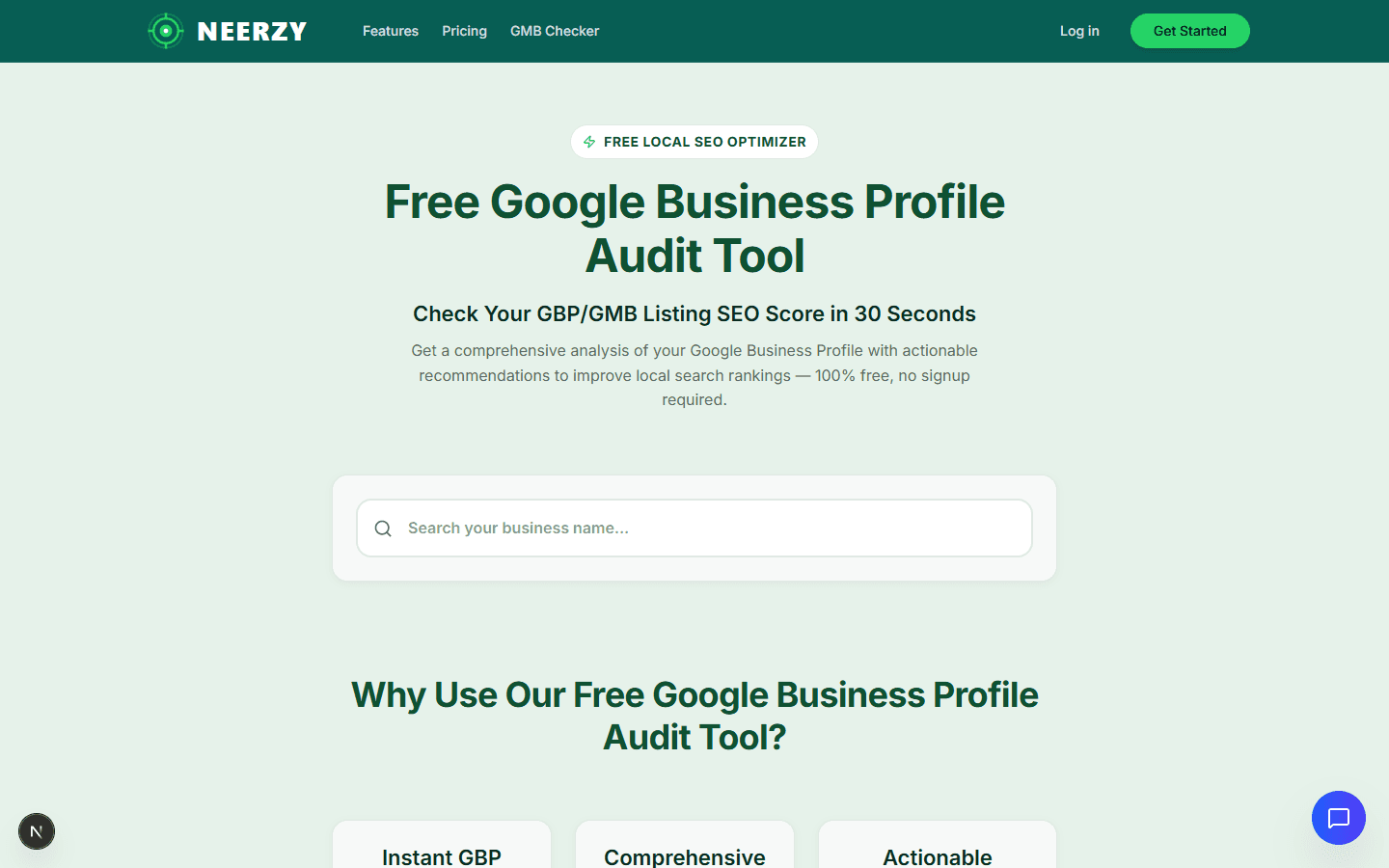
Start With Your Free Audit
Section 1: SEO for Plumbers — Quick Summary (TL;DR)
If you only have five minutes, here's what you need to know about plumbing SEO in 2026.
Key Takeaways
- Local SEO, not traditional SEO, decides most plumbing leads. Customers searching "plumber near me" or "emergency plumber" are shown the Google Local Pack (the map with three listings) before they ever see a normal website result.
- Your Google Business Profile (GBP) matters more than your website for local visibility. It's the single highest-leverage asset a plumbing business owns online.
- Reviews are a ranking factor and a trust factor. Both the number of reviews and how recently you got them influence your Local Pack position.
- Consistency beats intensity. A plumber who posts to Google weekly and asks for a review after every job will outrank a plumber who does a big SEO push once a year.
- AI search is now part of the ranking equation. Google AI Overviews, ChatGPT, and Perplexity are increasingly the first stop for local searches, and they favor businesses with clear, structured, frequently updated information.
- Most plumbing companies fail at SEO not from lack of skill, but from lack of time. The fix isn't more knowledge — it's a workflow that fits into a day already packed with jobs.
Who This Guide Is For
- Solo plumbers and small plumbing companies who don't have a marketing department
- Plumbing business owners who tried SEO once, got confused, and gave up
- Growing plumbing companies that want a clear, ranked list of what to fix first
- Multi-location plumbing businesses that need a repeatable local SEO system
What You'll Learn
By the end of this guide, you'll understand exactly how Google ranks plumbing businesses, how to optimize every part of your Google Business Profile, how to build a website that generates leads instead of just existing, how to get more reviews without feeling pushy, and how to show up in AI-generated answers — not just traditional blue links.
This guide is organized to be used two ways. Read straight through for a complete education in plumbing SEO from first principles. Or, if you already have a specific problem — low review count, no Google Posts, an outdated website — jump directly to the relevant section using the headings above. Either way, the guide ends with a practical checklist (Section 17) and a free tool (Section 18) that turns everything you've read into a single, scored action plan specific to your actual business.
How this guide connects to your free audit
Section 2: What Is SEO for Plumbers?
SEO for plumbers is the practice of improving a plumbing company's visibility in search results — Google Search, Google Maps, and increasingly AI-powered answer engines — so that more of the right customers find and call the business.
Unlike SEO for an e-commerce store or a national brand, plumbing SEO is almost entirely local. A plumber in Austin doesn't care about ranking in Seattle. What matters is ranking for searches made by people within driving distance, at the exact moment they have a leak, a clog, or a broken water heater.
How Plumbing SEO Works
Plumbing SEO isn't one tactic — it's six systems working together.
Organic Search
Traditional website rankings for terms like "water heater installation cost" or "how to fix a running toilet." This builds authority and captures research-stage customers, but it's the slowest-moving lever.
Google Maps
The map-based results shown when someone searches on their phone while standing in their kitchen with a leak. Google Maps rankings depend heavily on your Google Business Profile, not your website.
Google Business Profile
Your free Google listing — the box with your name, star rating, hours, and photos that appears in both Search and Maps. For plumbers, this is the single most important local SEO asset, full stop.
Website SEO
Your website's technical health, content quality, and relevance signals. It supports your Google Business Profile and captures customers who click through to learn more before calling.
Reviews
Star rating, review count, and how recently and consistently you're collecting reviews. Reviews influence both rankings and — more importantly — whether a customer picks up the phone.
Authority
Citations, backlinks, and mentions of your business across the web (Yelp, Angi, BBB, local news, other local business partnerships) that confirm to Google your business is real, established, and trustworthy.
How Customers Find a Plumber Today
Understanding plumbing SEO starts with understanding how people actually search for a plumber.
Emergency Search
"Plumber near me open now," "emergency plumber [city]," "24 hour plumber." High intent, high urgency, and the customer will call within minutes of searching — often the first result that answers, wins the job.
Near Me Search
"Plumber near me," "best plumber near me," "affordable plumber near me." Extremely high volume and almost entirely decided by the Google Local Pack.
Google Maps
Especially on mobile, many users skip the search results entirely and go straight to Maps, tapping through the three or four closest highly-rated plumbers.
Reviews
Before calling, most customers scan star ratings and read at least a few recent reviews. A 3.4-star profile with old reviews loses to a 4.6-star profile with reviews from last week — even if the 3.4-star business does better work.
Phone Call
The entire plumbing SEO funnel exists to produce one outcome: the phone ringing. Every tactic in this guide ladders up to that single goal.
Traditional Marketing vs. Plumbing SEO
| Traditional Marketing (Flyers, Truck Wraps, Yellow Pages) | Plumbing SEO | |
|---|---|---|
| Cost model | Ongoing spend, resets to zero each campaign | Compounding — visibility builds over time |
| Targeting | Broad, unfocused | Hyper-local, intent-based |
| Timing | Passive — customer sees it, forgets it | Active — shown at the exact moment of need |
| Measurability | Difficult to track | Fully trackable (calls, clicks, direction requests) |
| Trust signal | Low — anyone can print a flyer | High — backed by real reviews and Google's own trust algorithm |
Plumbing SEO isn't a replacement for word-of-mouth — it's word-of-mouth at scale, captured and organized in the place 90%+ of customers now start their search: Google.
A Realistic Example
Business A
Business B
Picture two plumbing businesses in the same mid-sized city, both licensed, both doing solid work, both roughly the same size.
Business A has a Google Business Profile with 40 photos (most uploaded when the profile was created three years ago), 22 reviews averaging 4.2 stars (the most recent from eight months ago), and no Google Posts published in over a year. Their website is a single static page built by a nephew in 2021.
Business B has a Google Business Profile with 130 photos added consistently over the past year, 210 reviews averaging 4.7 stars with new ones arriving every few days, and a Google Post published roughly weekly showing real completed jobs. Their website has dedicated pages for each service and each city they cover.
Both businesses might do equally good plumbing work. But Business B will appear in the Local Pack far more often, get more clicks, and convert more of those clicks into calls — not because Google "likes them more" in some abstract sense, but because every signal Google uses to judge relevance, distance, and prominence points in Business B's favor. This is the entire premise of plumbing SEO: make the invisible work you're already doing visible to the algorithm that decides who gets found.
Section 3: Why Most Plumbing Companies Fail at SEO
Walk into almost any local plumbing company and you'll find the same story: a Google Business Profile that hasn't been touched in eight months, a handful of reviews from 2023, and a website that was built once and never updated. This isn't a knowledge problem. It's a bandwidth problem.
No Time
The average plumber works 9–12 hour days, often solo or with a small crew. After the last job, the last thing anyone wants to do is log into a dashboard and write a Google Post.
No Marketing Knowledge
Terms like "NAP consistency," "schema markup," and "citation building" mean nothing to someone trained in pipe threading and water pressure, not search algorithms.
Inconsistent Google Activity
Google rewards businesses that show ongoing signs of life. A profile with one post from last spring signals inactivity — even if the business is thriving.
No Review System
Most plumbers ask for reviews inconsistently, if at all — usually only remembering with their best customers, and only when they think of it days later, by which point the moment has passed.
Outdated Website
Many plumbing websites were built once, years ago, and never touched again. No new content, no new photos, no signals to Google that the business is active.
Inactive Google Business Profile
An unclaimed, incomplete, or dormant Google Business Profile is one of the most common — and most fixable — reasons a plumbing business gets outranked by less-established competitors.
Missing Local Signals
Inconsistent business information across directories, no service-area definition, and no local content all quietly erode the trust signals Google uses to decide who ranks first.
The fix isn't more marketing knowledge. It's a workflow that requires none. Later in this guide, we'll show how finishing a job and sending one WhatsApp message can replace nearly all of the manual work above.
The Cost of Doing Nothing
The Cost of Doing Nothing
→ Check exactly which of these problems your business has — run your free audit
How Much Does Plumbing SEO Really Cost?
The honest answer depends entirely on which path you choose — and the paths differ far more in time than most plumbers expect.
| Approach | Typical Monthly Cost | Time Required From You | Best For |
|---|---|---|---|
| DIY, fully manual | $0 direct cost | 5–10+ hours/week | Owners with genuine spare time and patience to learn |
| Traditional SEO agency | $500–$3,000+/month | Low ongoing time, but slow to start | Larger, established businesses in highly competitive markets |
| Freelance SEO consultant | $300–$1,500/month | Moderate | Mid-sized businesses wanting a hands-on but lower-cost option |
| Automated workflow (e.g. Neerzy) | $0–$199/month | Minutes per completed job | Solo and small plumbing businesses needing consistency without a learning curve |
Section 4: How Google Ranks Plumbing Companies
Google has publicly confirmed that local rankings — including for plumbing businesses — are determined by three core factors.
Google Ranking Factors
Relevance
How well your Google Business Profile and website match what the searcher is looking for. A profile categorized correctly as "Plumber" with complete service listings ranks better for plumbing searches than a generically categorized "Contractor" listing. Relevance is also query-specific — a profile with "drain cleaning" explicitly listed as a service will outperform a generically described plumbing profile for that exact search, even if both businesses genuinely offer the same work.
Distance
How far your business (or your defined service area) is from the location used in the search. This is why a plumber three miles away often outranks a plumber with a "better" website twenty miles away. Distance is calculated from the searcher's actual location, not from the center of a city — which means the same business can rank differently for searchers in different neighborhoods of the same town.
Prominence
How well-known and well-reviewed your business is — both online and offline. This is the factor plumbers have the most influence over, and it's built through reviews, Google Posts, photos, citations, and website authority. Because prominence is earned through ongoing activity rather than a one-time setup, it's also the factor most directly affected by consistency — or the lack of it — over time.
Google Business Profile Signals
Category accuracy, completeness, review count and rating, photo volume and recency, posting frequency, and Q&A activity all feed directly into your GBP's ranking strength.
Website Signals
Page speed, mobile-friendliness, HTTPS security, keyword relevance, service-area content, and internal linking structure.
Review Signals
Total reviews, average rating, review velocity (how many new reviews per month), and how quickly and professionally you respond to them.
Local Authority Signals
Consistent NAP (Name, Address, Phone) information across directories like Yelp, Angi, and the Better Business Bureau, plus backlinks from local news sites or partner businesses. Running a periodic NAP audit — manually checking your business name, address, and phone number across every directory you're listed on, or using a citation-tracking tool to do it automatically — is one of the most overlooked local SEO tasks. A single outdated phone number on a high-authority citation source like Yelp or the BBB can quietly confuse both search engines and real customers for years if no one catches it.
Behavior Signals
Click-through rate, calls generated, direction requests, and how long users engage with your profile or website — all of which Google interprets as evidence of relevance and trust. Two practical tools worth knowing here: click-to-call buttons measurably increase the call-through rate from mobile searches, and call tracking software lets you measure exactly how many real calls your local SEO work is generating.
Understanding these five signal groups matters because it tells you exactly where to focus. A plumber with a beautiful website but zero recent reviews and an inactive Google Business Profile will still lose to a plumber with a mediocre website and an active, review-rich profile. Prominence, driven by activity and reviews, is where most plumbers have the most room to improve — and the least time to do it manually.
Which Factor Should You Focus On First?
Given limited time, prioritize in this order:
- Prominence signals first — reviews, Google Posts, and photos, because they're within your direct control and can move relatively quickly (weeks, not months).
- Relevance signals second — correct categories, complete service lists, and website content that clearly matches what customers search for.
- Distance is largely fixed — you can expand your defined service area, but you can't move your business, so don't spend time trying to "optimize" a factor you don't control. Focus energy where it compounds.
This ordering matters because it's the opposite of where most plumbing businesses instinctively start. Many owners assume a full website rebuild is the first step, when in reality, Google Business Profile activity — the fastest-moving, lowest-cost lever — typically produces visible results first.
Section 5: Google Business Profile Optimization for Plumbers
Your Google Business Profile (GBP, sometimes still called GMB) is the single most important asset in plumbing SEO. Here's how to optimize every section of it.
Business Categories
Set "Plumber" as your primary category. Add accurate secondary categories like "Drainage service," "Water heater repair service," or "Emergency plumber" if applicable. Incorrect or overly broad categories (like just "Contractor") dilute your relevance for plumbing-specific searches.
→ Category and NAP accuracy both feed into the audit's Local SEO Optimization and Completeness scores — check yours, or read the Completeness Score Guide and Local SEO Optimization Score Guide directly.
NAP Consistency
Your Name, Address, and Phone number must match exactly across your Google Business Profile, website, and every directory listing (Yelp, Angi, BBB, Facebook). Even small inconsistencies — "St." vs. "Street," a different phone extension — can quietly weaken local trust signals.
Business Description
Use the full character allowance (roughly 750 characters) to describe your services, service area, and what makes your business different. Write for humans first, but naturally include terms like "licensed plumber," your city name, and your core services.
Service Areas
Define every city, town, or zip code you actually serve. This directly affects whether you show up in the Local Pack for searches made outside your exact business address.
→ Service area setup is checked as part of the audit's Local SEO Optimization score — run your audit or read the Local SEO Optimization Score Guide to see if it's limiting your visibility.
Products
List common services as "products" where relevant — water heaters, fixtures, pipe materials — to give Google (and customers) more specific, searchable detail.
Services
Add every individual service you offer: drain cleaning, leak detection, water heater installation, sewer line repair, emergency plumbing, and so on. Each listed service is a small relevance signal for a specific search query.
Photos
Real Photos Outrank Stock Photos Every Time
→ Not sure where your photo count stands? The free audit tool scores Visual Content as its own weighted category (20% of your total score) — check your photo score or read the Visual Content Score Guide.
Videos
Short videos of completed jobs or your team at work add another layer of trust and engagement — an underused lever most competitors haven't touched.
Google Posts
Weekly posts (offers, completed jobs, seasonal reminders) are one of the strongest "activity" signals Google uses to judge whether a business is alive and engaged.
→ Want to know whether Google is currently detecting enough activity on your profile? Engagement & Activity is its own scored category in the audit — run it here or read the Engagement & Activity Score Guide.
Questions & Answers
Monitor and answer the public Q&A section on your profile. Seed it yourself with common questions ("Do you offer emergency service?") if it's empty.
Attributes
Fill in every applicable attribute — women-led, veteran-owned, free estimates, online booking — these small tags improve both relevance and searcher trust.
Messaging
Enable Google's messaging feature so customers can text your business directly from the profile — a growing preference, especially for non-emergency inquiries.
Booking
If you use scheduling software, connect it so customers can book directly from your Google listing without ever visiting your website.
Business Hours
Keep hours accurate and up to date, including holiday hours — an inaccurate "closed" status is one of the fastest ways to lose an emergency job to a competitor.
Holiday Hours
Update these proactively before major holidays. Emergency plumbing searches spike around holidays, and an outdated hours listing can cost you those calls entirely.
Putting It All Together
None of these fourteen elements is individually complicated. The reason most plumbing profiles are incomplete isn't difficulty — it's that filling out a profile completely takes a sustained sitting of focused time, and then maintaining it (fresh photos, weekly posts, current hours) takes ongoing time indefinitely. This is precisely why Google's own ranking algorithm treats a complete, actively maintained profile as such a strong signal: it's a genuine, hard-to-fake indicator that a real, currently-operating business is behind the listing.
GBP Optimization Checklist
- Correct primary category ("Plumber") set
- Accurate secondary categories added
- Business description fully written (~750 characters)
- Every service area accurately listed
- All individual services listed
- 50+ recent, high-quality photos uploaded
- At least one Google Post published weekly
- Q&A section actively monitored and seeded
- Business hours (including holidays) kept current
- Messaging enabled
- Booking link connected (if applicable)
- Attributes fully checked
- Website link added
- Holiday hours updated proactively
→ Run a free audit of your Google Business Profile to see exactly which of these fields are complete, and which are quietly costing you rankings — or read Understanding Your Audit Score for a full breakdown of how each field connects to your overall score.
Section 6: Google Maps SEO for Plumbers
How the Local Pack Works
When someone searches "plumber near me," Google shows a map with three highlighted businesses above the normal organic results — this is the Local Pack. For most plumbing searches, especially on mobile, over 60% of clicks go to those three listings before a user ever scrolls further.
Google Maps Ranking Factors
The same relevance, distance, and prominence factors from Section 4 apply here, but Maps rankings are even more heavily weighted toward Google Business Profile completeness and review signals than toward website quality.
Service Areas
Properly defined service areas (rather than relying solely on your physical address) allow you to appear in Map searches for surrounding towns you actually serve, not just your home city.
Local Citations
Consistent listings on Yelp, Angi, HomeAdvisor, BBB, and local chamber-of-commerce directories reinforce your business's legitimacy and location to Google's local algorithm.
→ NAP consistency across the web is part of the audit's Local SEO Optimization score — check yours or read the Local SEO Optimization Score Guide to catch mismatches before they cost you rankings.
Geo Signals
Location-specific content on your website (city and neighborhood names used naturally) helps reinforce the geographic relevance Google is trying to match to the searcher.
Map Embeds
Embedding a Google Map of your business location on your website's contact page is a small but real local relevance signal.
Driving Directions
The number of times users request directions to your business from your Google listing is tracked by Google as an engagement signal — an active, accurate address supports this.
Location Relevance
The more consistently your business name, categories, service list, and website content all point to the same core service area, the stronger your Maps relevance becomes.
Why Maps Behaves Differently Than Regular Search
Traditional organic search results are dominated by website content — the words on your pages, the authority of your domain, the links pointing at it. Google Maps results are dominated by an entirely different set of signals rooted in your Google Business Profile: how complete it is, how many reviews you have, how recently you've posted, and how close you are to the person searching.
This means a plumbing business could theoretically have a mediocre website and still dominate the Local Pack purely through a strong, active Google Business Profile — something that would be nearly impossible in traditional organic search. It's genuinely good news for busy plumbers: the highest-leverage lever (your Google Business Profile) is also the one that requires no web development skill, no writing talent, and no ongoing content budget — just consistency.
Beyond Google: Local Services Ads, Bing Places, and Apple Business Connect
| Platform | Cost | Effort | Trust Signal |
|---|---|---|---|
| Google Local Services Ads | Pay-per-lead | Application + background check | Google Guaranteed badge |
| Bing Places | Free | Low — mirrors GBP setup | Copilot & enterprise visibility |
| Apple Business Connect | Free | Low — uses same GBP info | Apple Maps, Siri, Messages |
Tracking Your Actual Rank: Geo-Grid Tools
A single Google search only shows you your ranking from one point on the map — but a plumber's actual visibility varies significantly across their service area. Geo-grid tracking tools (such as Local Falcon) simulate searches from a grid of points across a city, showing exactly where a business ranks in the Local Pack from each location — revealing, for example, that a plumber ranks #1 downtown but falls off the map entirely ten miles out.
Section 7: Local SEO Strategy for Plumbing Companies
Location Pages
If you serve multiple cities, build individual pages for each — "Plumber in [City A]," "Plumber in [City B]" — each with unique content, not copy-pasted text with the city name swapped.
Service Pages
Dedicated pages for each core service (drain cleaning, water heater repair, leak detection) rank for specific high-intent searches that a single generic "Services" page cannot compete for.
Neighborhood Pages
For dense metro areas, neighborhood-level pages ("Plumber in Downtown [City]") can capture hyper-local searches your city-level page misses.
Multi-City SEO
Businesses serving a wide region should prioritize their 3–5 highest-volume cities with full location pages before attempting to cover every small town in a service area.
Multi-Location Businesses
Plumbing companies with multiple physical branches need a separate, fully optimized Google Business Profile for each location — never one shared profile trying to represent multiple addresses. Each profile needs its own reviews, its own photos, and its own posting activity; a single well-maintained "flagship" profile propping up several neglected satellite profiles won't help those satellite locations rank.
Internal Linking
Link location and service pages to each other naturally ("Serving [City A] and [City B] with 24-hour emergency plumbing") to help Google understand the relationship between your service area and your offerings.
A Practical Rollout Order
If you're building this out from scratch, don't try to launch every location and service page at once. A sensible sequence:
- Your single highest-volume city and highest-demand service first — get this page genuinely strong before moving on.
- Your next 2–3 highest-volume cities, each with a real, differentiated page.
- Remaining core services (drain cleaning, water heater, leak detection) as standalone pages.
- Smaller towns and neighborhood pages only after the above are performing.
Section 8: Keyword Research for Plumbers
Commercial Keywords
High-intent, ready-to-buy terms: "plumber near me," "emergency plumbing repair," "water heater installation [city]." These deserve the most SEO investment because they convert at the highest rate.
Emergency Keywords
"24 hour plumber," "emergency plumber open now," "burst pipe repair near me." These searches happen at all hours and reward businesses with accurate, always-current hours and fast response messaging.
Service Keywords
Specific to individual services: "drain cleaning cost," "sewer line repair," "tankless water heater installation." These support dedicated service pages.
Near Me Keywords
"Plumber near me," "affordable plumber near me," "best plumber near me" — almost entirely decided by Google Maps and Local Pack rankings rather than traditional organic results.
Question Keywords
"Why is my water heater leaking," "how much does drain cleaning cost," "do I need a plumber for a running toilet." These fuel blog content and are increasingly the format AI search engines pull answers from.
Voice Search Keywords
Longer, conversational phrases like "who's the best plumber near me" or "is there a 24 hour plumber open right now" — voice assistants favor content written in natural, complete-sentence answers.
AI Search Queries
Prompts typed into ChatGPT, Gemini, or Perplexity like "find me a reliable plumber in [city]" or "what should I expect to pay for a water heater replacement." Covered in depth in Section 16.
Finding Your Own Keywords
Listen to Your Customers for the Best Keywords
Section 9: On-Page SEO for Plumbing Websites
Titles
Each page needs a unique title tag that includes your core service and city — "Emergency Plumber in [City] | 24/7 Service" outperforms a generic "Home" or "Welcome to [Company Name]."
Meta Descriptions
A concise, compelling 150–160 character summary of the page that encourages a click, ideally including your service, location, and a differentiator (fast response, licensed, free estimates).
URLs
Clean, readable URLs that reflect page content — /water-heater-repair-[city] is stronger than a string of random characters or generic IDs.
Headings
A single, clear H1 per page, followed by logically structured H2s and H3s that mirror how a customer would naturally scan the page for information.
Content
Genuinely useful, specific content — not generic filler. Real detail about your process, service area, and pricing approach builds far more trust (and ranks better) than vague marketing language.
Images
Every image should have descriptive alt text ("plumber repairing water heater in [city]") — this helps both accessibility and image search visibility.
Videos
Embedded videos of completed jobs increase time-on-page, a positive engagement signal, and build trust faster than text alone.
Internal Links
Connect related service and location pages to each other so both users and search engines can navigate your site's full scope of services and coverage area.
External Links
Linking out to credible, relevant sources (manufacturer specs, licensing boards) when genuinely useful can reinforce topical credibility — used sparingly and only when it adds real value.
On-Page SEO Pre-Publish Checklist
- Unique title tag with core service and city
- Compelling meta description (150–160 chars)
- Clean, readable URL
- Single H1, logical H2/H3 structure
- Specific, useful content (no generic filler)
- All images have descriptive alt text
- Video embedded where relevant
- Internal links to related service/location pages
- External links to credible sources (sparingly)
Section 10: Technical SEO
Core Web Vitals
Google measures loading speed, interactivity, and visual stability as ranking factors. A slow-loading plumbing website — especially on mobile, where most emergency searches happen — actively costs you rankings and calls.
Speed
Compress images, minimize unnecessary scripts, and use modern hosting. A plumbing site should load in under 2–3 seconds on mobile.
Mobile
The majority of "plumber near me" searches happen on a phone. A site that isn't fully responsive on mobile is fighting SEO with one hand tied behind its back.
HTTPS
Every plumbing website should run on HTTPS (the padlock icon). It's both a baseline trust signal for customers and a confirmed Google ranking factor.
Schema
Structured data markup that explicitly tells search engines what your business is, where it's located, and what it offers (covered in full in Section 11).
Indexing
Make sure Google can actually find and index your pages — check Google Search Console for indexing errors or pages accidentally blocked from search.
Crawlability
A clean site structure with logical navigation helps Google's crawlers find and understand every page, rather than missing service or location pages buried too deep in your site.
XML Sitemap
An up-to-date sitemap submitted to Google Search Console helps ensure every important page — including new location and service pages — gets discovered and indexed quickly.
Robots
A correctly configured robots.txt file ensures you're not accidentally blocking Google from crawling important pages, a surprisingly common and costly mistake on DIY-built sites.
How Much Technical SEO Actually Matters for a Plumber
| Action | Expected Impact |
|---|---|
| Faster page load (shaving 0.5s) | Low-moderate — table stakes |
| Mobile responsiveness | High — required, not optional |
| HTTPS | High — required, not optional |
| Weekly Google Posts | High — direct prominence signal |
| Getting 5 new reviews this month | Very high — compound ranking benefit |
Technical SEO is table stakes, not a differentiator. Get it right once, then redirect ongoing effort toward reviews and Google Posts.
Section 11: Schema Markup for Plumbers
Schema markup is structured code added to your website that explicitly tells search engines (and increasingly, AI search tools) what your business is and does — rather than making them infer it from plain text.
{
  "@type": "Plumber",
  "name": "Smith Plumbing",
  "areaServed": "Austin, TX",
  "openingHours": "24/7"
}LocalBusiness
The foundational schema type that defines your business name, address, phone number, hours, and service area in a machine-readable format.
Plumber
A more specific schema subtype (under LocalBusiness) that explicitly categorizes your business as a plumbing service — helping search engines match you precisely to plumbing-related queries.
Review
Markup that structures your customer reviews so search engines can display star ratings directly in search results.
FAQ
FAQ schema structures your frequently asked questions so they can appear directly in search results as expandable answers, and are especially valuable for AI Overviews and voice search.
HowTo
Useful for instructional blog content ("How to shut off your main water valve") — structures step-by-step content in a format search engines and AI tools can extract cleanly.
Service
Marks up individual services (drain cleaning, water heater repair) with structured detail, reinforcing relevance for specific service searches.
Organization
Broader business information — logo, social profiles, founding details — that helps establish overall brand authority and legitimacy to search engines.
A Simple Example
You Don't Need to Write This By Hand
{
  "@type": "Plumber",
  "name": "Your Plumbing Company",
  "address": "123 Main St, Your City, ST",
  "telephone": "+1-555-555-5555",
  "openingHours": "Mo-Su 00:00-23:59",
  "areaServed": ["Your City", "Nearby Town"]
}
Section 12: Content Marketing for Plumbers
Blog Strategy
A consistent, focused blog — even just 2–4 posts a month answering real customer questions — builds long-term organic visibility and feeds AI search engines with clear, citable answers.
Seasonal Content
| Season | Common Search Spikes | Content & Post Ideas |
|---|---|---|
| ❄️ Winter | Frozen/burst pipes, no hot water, heating-adjacent plumbing | "How to prevent frozen pipes," pipe insulation tips, emergency burst-pipe response |
| 🌧️ Spring | Sump pump failures, water heater flushing, spring cleaning plumbing checks | Sump pump maintenance guides, spring inspection offers |
| ☀️ Summer | Outdoor plumbing, irrigation, vacation-related leak concerns | Outdoor faucet and irrigation tips, "what to check before a vacation" |
| 🍂 Fall | Winterization prep, water heater efficiency before winter demand | "Winterize your plumbing" checklists, pre-winter inspection offers |
Publishing the right content 2–4 weeks ahead of each seasonal spike — rather than reactively during it — captures search demand right as it's building, not after competitors have already answered the same question.
Service Content
In-depth pages explaining each service in detail — what it involves, typical cost ranges, how long it takes — build trust with research-stage customers before they call.
Educational Content
Genuinely helpful how-to content ("how to tell if you have a slab leak") builds topical authority and is exactly the format AI Overviews and ChatGPT prefer to cite.
Case Studies
Real job stories — the problem, the fix, the outcome — build credibility and provide fresh, authentic photo and video content for both your website and Google Business Profile.
Videos
Short clips of real jobs, embedded in blog posts and service pages, increase engagement time and provide content that can be repurposed across Google Posts and social media.
FAQs
A dedicated FAQ section (or FAQ blocks on service pages) directly answers the exact questions customers type into Google — and into AI assistants.
20 Blog Topic Ideas to Start With
- How to tell if you have a hidden slab leak
- What to do in the first 5 minutes of a burst pipe
- Why your water heater is making noise (and when to worry)
- How much does drain cleaning really cost?
- Tankless vs. traditional water heaters: which is right for your home
- Signs your sewer line needs repair
- How to winterize your pipes before the first freeze
- Why your water pressure suddenly dropped
- DIY fixes vs. when to call a professional plumber
- What's actually causing that gurgling drain sound
- How often should you flush your water heater
- Warning signs of a failing sump pump
- What to expect during a plumbing inspection
- How to choose the right size water heater for your household
- Common causes of low hot water pressure
- Why is my toilet running constantly?
- Preparing your plumbing for a home renovation
- What licensed plumbing actually means (and why it matters)
- Emergency plumbing: what counts as a true emergency
- How to read your water meter to catch a hidden leak
Each of these doubles as both a blog post and an FAQ entry — write the answer once, use it in both places.
Section 13: How Plumbers Get More Google Reviews
→ This section maps directly to the Reviews & Reputation category in your Neerzy Audit — the highest-weighted single category at 25% of your overall score.
Why Reviews Matter
Reviews are a confirmed local ranking factor and the single biggest trust signal a potential customer encounters when choosing between plumbers. For most homeowners, the decision of who to call is made in the few seconds they spend looking at star ratings and recent review snippets in the Local Pack — before they ever visit a website.
Two things matter most about reviews: recency and velocity. A business with 200 reviews from three years ago and nothing recent reads very differently to both customers and Google than a business with 80 reviews and a steady stream of new ones every month. Google is trying to answer "is this business still good, right now" — and a stale review pile, however impressive, doesn't fully answer that question.
How to Ask for a Review Without Being Pushy
The best review request is short, personal, immediate, and comes with a direct link. The moment of peak satisfaction is the minute after the job is done — not two days later. Timing is the single biggest lever most plumbers aren't pulling.
A simple WhatsApp message like this, sent right after the job:
"Hi [Name], thanks for calling us out today. Would you mind leaving us a quick Google review? [direct link] — it really helps. [Your name]"
Outperforms any elaborate follow-up email sent a week later. Keep it short, include a one-tap link, and send it while the experience is fresh.
Review Request Templates
Same-day WhatsApp (recommended):
"Hi [Name], great working with you today. If you're happy with the job, a quick Google review would mean a lot — [link]. Thanks! [Your name]"
Text message version:
"[Name] — thanks for choosing [Business Name]. If you have a moment, a Google review helps us a lot: [direct link]. No worries if not!"
What NOT to do: Offering a discount, gift card, or any incentive in exchange for a review violates Google's policies and puts your entire profile at risk if flagged. Ask plainly — don't barter.
Responding to Reviews
Response rate is a scored input in the audit — it's not optional politeness, it's a measurable SEO signal.
For positive reviews: A brief, genuine thank-you that references something specific in the review. Takes under a minute and reads as authentic.
For negative reviews: Acknowledge the issue without getting defensive, briefly state what you did or will do about it, and take further detail offline. Future customers reading the exchange are judging your response to the problem far more than the problem itself — a thoughtful reply to criticism often builds more trust than it costs.
How Many Reviews Do You Need?
There's no universal number, since it depends on your local market's competitiveness. A reasonable target for most small plumbing businesses: 4–8 new reviews per month — roughly one for every few completed jobs. Businesses in dense, competitive metro markets should aim higher. The more useful target is an ongoing monthly flow rather than a one-time total to hit and stop at.
Section 14: Google Posts for Plumbers
Google Posts are short updates — an image, a few lines of text, and an optional call-to-action button — published directly to your Google Business Profile and visible in both Search and Maps. They appear below the main profile information when a customer finds your listing, and they expire after seven days, which is exactly why posting consistently matters: a stale post is visible evidence of a dormant profile.
What to Post
- Completed jobs: A real photo from a job site with a brief, honest description of what was done. "Replaced a 15-year-old water heater in [neighborhood] today — new installation running smoothly." This is the highest-performing post type for plumbing businesses because it's concrete, recent, and visual.
- Seasonal offers or reminders: "Headed into winter — now's a good time to check your pipe insulation. Call us for a free consultation."
- Quick tips: "Running your outdoor hose bib before the first freeze? Here's how to shut it off properly."
How Often to Post
At least once a week. Businesses posting two to three times weekly, tied directly to completed jobs, tend to score highest on the Engagement & Activity category. The Neerzy workflow — sending a job photo on WhatsApp and having a post generated automatically — is built specifically to make this habit effortless regardless of posting frequency.
→ Read the Engagement & Activity Score Guide for how post frequency and recency are scored in your audit.
Section 15: Citation Building and NAP Consistency
A citation is any mention of your business's name, address, and phone number (NAP) on the web — whether on a major directory like Yelp or Angi, a local chamber of commerce website, an industry association listing, or a local news article. Citations don't require a backlink to count — unlinked mentions are still signals to Google that your business is real, established, and geographically anchored to a specific location.
The Most Important Citations for Plumbers
- Google Business Profile — the primary source of truth. Everything else should match this.
- Yelp — high authority, widely crawled, often ranks independently for plumbing searches.
- Angi (formerly Angie's List) — a major home services directory with significant SEO weight in the trades.
- HomeAdvisor — similar authority to Angi, often appearing alongside it in search results.
- Better Business Bureau (BBB) — high domain authority; a listing here (even unaccredited) adds a meaningful NAP signal.
- Facebook Business Page — used as a citation source and separately visible in local searches.
- Local chamber of commerce — geographically specific and often highly trusted by Google's local algorithm.
→ NAP consistency across these directories is scored directly in the Local SEO Optimization category of your Neerzy audit.
Section 16: AI Search and Plumbing SEO in 2026
Google AI Overviews, ChatGPT, Gemini, and Perplexity aren't a replacement for traditional search — yet. But they're an increasingly significant share of how local service searches get answered, and the businesses showing up in AI-generated answers in 2026 are the ones that optimized their traditional local SEO fundamentals well enough to also be credible, structured, and consistently visible online.
How AI Search Engines Decide What to Recommend
AI systems rely on automated crawlers (similar in concept to Googlebot) to read and index web content, and on structured, machine-readable content — schema markup, clearly labeled headings, and direct factual statements — to extract accurate information quickly.
Generative Engine Optimization (GEO)
The practice of structuring content so AI systems can easily understand, extract, and cite it — clear headings, direct answers, and defined entities (your business name, service, and location stated plainly, not implied).
Answer Engine Optimization (AEO)
Closely related to GEO, AEO focuses specifically on structuring content — especially FAQs — to directly answer the exact questions people ask voice assistants and AI chatbots, in complete, self-contained sentences.
Entity SEO and the Knowledge Graph
Beyond individual pages, Google (and increasingly other AI systems) build an internal understanding of your business as an entity — a distinct, defined "thing" with a name, category, location, and set of attributes. A strong, consistent entity — the same business name, address, and category stated identically across your website, Google Business Profile, and every directory — is what allows Google and AI systems to build a confident Knowledge Panel and cite your business accurately in generated answers.
What AI Search Actually Rewards
An AI answer engine isn't trying to rank ten blue links — it's trying to generate one confident answer to "who should I call?" To do that safely, it leans on the same signals a cautious human would: is this business real and currently operating (an active, complete profile), is it trusted by others (review volume and rating), and is the information about it clear and unambiguous (structured data, consistent NAP, plainly stated services and location).
The practical takeaway: everything in this guide — a complete Google Business Profile, consistent reviews, structured schema, and clear service content — is exactly what powers strong AI search visibility too. There's no separate "AI SEO" strategy to learn; strong fundamentals now serve both traditional and AI search simultaneously.
Section 17: The Complete Plumbing SEO Checklist
Use this as a working document, not a one-time exercise. Print it, save it, or copy it into a task manager, and revisit it monthly — the businesses that treat this list as an ongoing habit consistently outperform the ones that complete it once and move on.
Google Business Profile
- Correct primary category ("Plumber") set
- All applicable secondary categories added
- Business description fully written out (up to ~750 characters)
- Every service area accurately listed
- All individual services listed
- 50+ recent, high-quality photos uploaded
- At least one Google Post published weekly
- Q&A section actively monitored and seeded
- Business hours (including holidays) kept current
Website
- Fast-loading, mobile-optimized design
- Unique title tags and meta descriptions per page
- Dedicated pages for each core service
- Dedicated pages for each city/location served
- HTTPS enabled sitewide
- Schema markup implemented (LocalBusiness, Plumber, Review, FAQ)
Reviews
- Review request sent after every completed job
- All reviews responded to within 48 hours
- Steady monthly flow of new reviews, not one-off bursts
Content
- Regular blog posts answering real customer questions
- FAQ content structured for AI and voice search
- Seasonal content published ahead of relevant seasons
Local SEO
- NAP consistent across website, GBP, and all directories
- Active listings on Yelp, Angi, and BBB
- Location pages built for every city served
→ Run your free audit now to see your current score against this checklist — then use How to Improve Your Overall Audit Score to turn your results into a sequenced action plan.
Common Plumbing SEO Mistakes to Avoid
Keyword-stuffing your business name
- Buying fake reviews or review swaps. Beyond violating Google's terms, purchased or swapped reviews are increasingly detected and removed in bulk, sometimes taking legitimate reviews down with them.
- Duplicate or near-duplicate location pages. Copy-pasting one city page and swapping the city name, without any genuinely unique content, is easy for Google to detect and tends to suppress rather than help rankings.
- Multiple Google Business Profiles for one location. Creating a second listing to "double" visibility instead violates guidelines and typically results in one or both listings being suspended.
- Ignoring negative reviews. Silence on a negative review reads as indifference to future customers browsing your profile — even a brief, professional response changes that impression substantially.
- Inconsistent NAP across the web. A different phone number on Yelp than on your website, or an old address still listed on a directory, quietly erodes the trust signals that support your rankings.
- Treating SEO as a one-time project. Doing a strong initial push and then going quiet for six months. Google's algorithm rewards ongoing activity, not historical activity.
Section 18: Free Google Business Profile Audit
This is where most plumbing SEO guides stop — with a checklist and a "good luck." We built something more useful: a free tool that actually scores your Google Business Profile against these exact factors in under 30 seconds.
The Neerzy GBP Audit Tool analyzes your live Google Business Profile and returns a score out of 100, broken into five weighted categories.
What the Audit Checks
- Completeness (25% weight): Business name, address, and phone presence; website link; business hours; primary category; business description; attributes and services offered.
- Reviews & Reputation (25% weight): Total review count, average star rating, review velocity (new reviews per month), and response rate/time to existing reviews.
- Visual Content (20% weight): Total photo count, recency of uploads, and photo/video diversity.
- Engagement & Activity (15% weight): Whether your profile is claimed, how often you're posting, whether your Q&A section is active, and whether you're responding to reviews.
- Local SEO Optimization (15% weight): Keyword usage in your business name and description, category optimization, defined service areas, NAP consistency, and backlinks from your website to your GBP.
How to Read Your Audit Score
The tool returns a single score out of 100, along with a plain-language summary and a category-by-category breakdown showing exactly which of the five areas are dragging the score down. Read Understanding Your Audit Score for the full breakdown, or go straight to How to Improve Your Overall Audit Score for the action-first version.
Why Monthly Audits Matter
Google Business Profiles aren't "set and forget." Reviews age, posting activity lapses, and competitors improve their own profiles. Running the free audit monthly is the easiest way to catch a slipping score before it costs you rankings.
→ Run Your Free Google Business Profile Audit Now
Section 19: How Neerzy Makes Plumbing SEO Simple
Everything in this guide is accurate, thorough, and — realistically — a lot for a busy plumbing business owner to execute manually every single week. So let's compare the two ways this actually gets done.
Traditional SEO Workflow
- Hire an agency. Expensive, slow to show results, and often disconnected from the day-to-day reality of your jobs.
- Learn multiple SEO tools. Google Business Profile, a website CMS, a review-request platform, a social scheduler — each with its own login and learning curve.
- Manually write Google Posts. Remembering to sit down, think of something to post, and actually publish it — every single week, indefinitely.
- Remember to ask for reviews. Usually forgotten in the rush to the next job, or asked too many days later to be effective.
The Neerzy Workflow
Neerzy was built around one observation: plumbers already send WhatsApp messages every day. So instead of asking business owners to learn new software, Neerzy fits into a habit that already exists.
- Finish the job — same as always, no change to how you work.
- Send one WhatsApp message — a photo from the job site, sent like any normal text.
- Neerzy creates a Google Post — a ready-to-publish, Google-compliant post generated automatically from that photo, typically in under 60 seconds.
- Neerzy updates your website — fresh content added automatically, keeping your site active in Google's eyes without you touching a CMS.
- Neerzy sends a review request — dispatched immediately after the job, while the customer's satisfaction is highest.
- Neerzy keeps your business active — consistently, job after job, without relying on anyone remembering to log in and do marketing tasks.
The math behind this is simple: 10 completed jobs = 10 Google posts + 10 review opportunities. More completed jobs already means more marketing activity — automatically, without extra work.
Who Neerzy Is Best For
- Solo plumbers who don't have five minutes a day for marketing, let alone five hours a week
- Small plumbing companies without a dedicated marketing hire
- Busy local trades more broadly — electricians, HVAC techs, roofers — who face the identical time and consistency problem
- Non-technical business owners who don't want to learn a dashboard, a CMS, or an SEO tool
Pricing starts at Free (5 total WhatsApp posts), then Pro at $39/month, Growth at $79/month, and Agency at $199/month — built for marketing agencies managing multiple plumbing or trade clients.
→ Start with 5 Free Posts · View Pricing
Section 20: Frequently Asked Questions
SEO Questions
What is SEO for plumbers?
SEO for plumbers is the process of improving a plumbing company's visibility in Google Search, Google Maps, and AI search tools so that more local customers find and call the business.
How is plumbing SEO different from regular SEO?
Plumbing SEO is almost entirely local — it focuses on Google Business Profile optimization, Google Maps rankings, and hyper-local content, rather than broad national keyword rankings.
How long does plumbing SEO take to work?
Google Business Profile improvements (photos, posts, reviews) can show impact within a few weeks. Website and content-based SEO typically takes 3–6 months to show significant ranking movement.
Do I need a website to rank as a plumber?
A website strongly helps, but a complete, active Google Business Profile alone can generate significant local visibility even before a website is fully optimized.
Is SEO better than paid ads for plumbers?
They serve different purposes — SEO builds compounding, long-term visibility, while paid ads provide immediate but temporary visibility. Most successful plumbing businesses use both, weighted toward SEO over time as it compounds.
How much does plumbing SEO cost?
Agency-managed plumbing SEO commonly ranges from a few hundred to several thousand dollars per month depending on scope. Automated tools like Neerzy offer a lower-cost, self-managed alternative starting free.
Can I do plumbing SEO myself?
Yes — most of the highest-impact tactics (a complete Google Business Profile, consistent reviews, regular Google Posts) don't require technical skill, just consistency, which is exactly what automation tools are designed to provide.
What's the single highest-impact SEO action for a plumber?
Completing and actively maintaining your Google Business Profile — it typically has a larger, faster impact than any single website change.
Does SEO work for a brand-new plumbing business with no reviews yet?
Yes, but it starts more slowly — a new business should prioritize claiming and fully completing its Google Business Profile immediately, then focus heavily on collecting its first 10–20 reviews before expecting strong Local Pack visibility.
How often should I check my SEO performance?
Monthly is a reasonable baseline for most plumbing businesses — enough to catch a declining review response rate or a lapse in posting before it meaningfully affects rankings.
Do backlinks matter for plumbing SEO?
They help, particularly from local, relevant sources, but they matter less for plumbing SEO than for competitive national industries — Google Business Profile signals and reviews carry more weight for local service searches.
Neerzy Questions
What is Neerzy?
Neerzy is a WhatsApp-based marketing automation platform for local trades — plumbers, electricians, HVAC techs, and similar businesses — that turns a job photo into a Google Post, website update, and review request automatically.
Do I need to install an app to use Neerzy?
No — Neerzy works entirely through WhatsApp, which most plumbing businesses already use daily.
How fast does Neerzy generate content after I send a photo?
Typically under 60 seconds from the moment a job photo is sent on WhatsApp.
Do I own my website if I use Neerzy?
Yes — Neerzy builds the site, but you own the domain, with no lock-in.
Is Neerzy affiliated with Google or WhatsApp?
No — Neerzy is an independent platform and is not affiliated with, endorsed by, or a partner of Google or WhatsApp. Google Business Profile and WhatsApp are trademarks of their respective owners.
Can I cancel Neerzy anytime?
Yes, per Neerzy's pricing page, plans can be canceled at any time.
See How Your Plumbing Business Compares
You now have the complete playbook — every ranking factor, every optimization, every checklist item that separates a plumbing business stuck on page two from one dominating the Local Pack.
Here's the honest summary of everything above: plumbing SEO in 2026 rewards businesses that are complete, active, and reviewed — consistently, not occasionally. A perfect one-time setup that goes stale in six months will eventually lose to a modest profile that's updated every single week.
The fastest next step isn't reading further. It's seeing exactly where your business stands right now.